

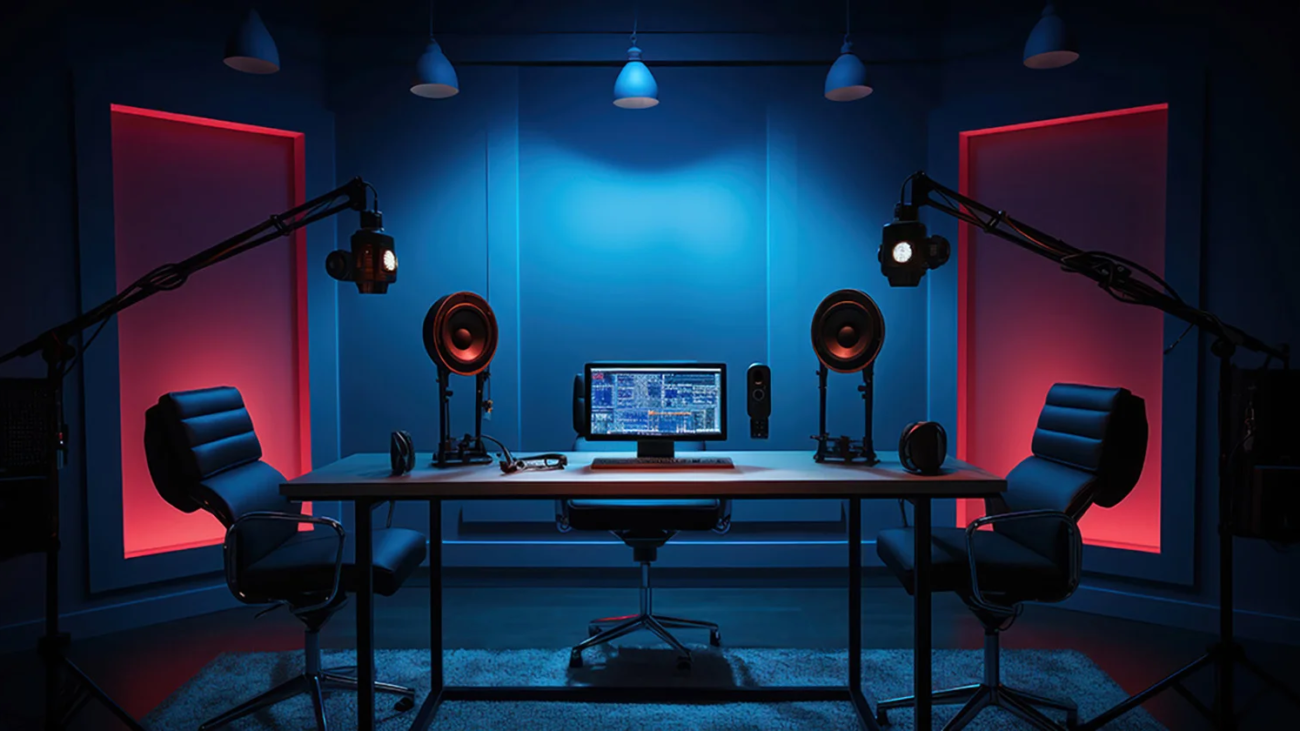
Soundproofing helps keep external noise from entering a recording space, while acoustic treatment minimizes sound bounce for better voice clarity. Professional podcast studios should be optimized for both audio and video recording. Here are some features that influence room acoustics and the quality of audio in a podcast studio:
Door Seal Systems
A podcast studio with doors with heavy, solid cores and drop seals blocks hallway sounds, so microphones capture the speaker’s voice without picking up nearby conversations. Doors with two magnetic strips along the frame hold panels tightly, reducing sound leakage from adjacent control rooms. When soft-close pneumatics are installed, slamming doors are not picked up by microphones, helping preserve speech clarity from start to finish.
Some rooms also have perimeter gaskets that compress tightly when closed. This minimizes air paths and reduces echoes from footsteps or closing doors in the recording area. Thresholds with angled sweeps close under-door gaps, so air currents and noises do not interfere with quiet narration. Studios using acoustic caulk around hinge barrels seal small vibration points that can loosen gradually.
Floor Isolation Layers
Sprung subfloors in the rooms separate the recording area from the building floor, reducing elevator noise during busy hours. Isolation pucks under microphone and speaker stands can also transfer gear vibration off the concrete; this keeps dialogue steady even if the building shakes. Studios with damping sheets under carpets reduce noise from chair movements and footsteps. Raised floors and spring traps under tiles effectively divert HVAC and building vibrations away from where people talk. Perimeter joints limit noise traveling across the slab, which makes footsteps from nearby rooms less likely to carry into the recording studio.
Corner Bass Control
Deep corner bass traps extend from the floor to the ceiling, controlling the low frequencies that can build up in a room’s corners. These traps minimize boom under tables, which sometimes makes words sound indistinct. Traps are filled with tightly packed rock wool, so standing waves are significantly reduced.
Bass traps positioned behind furniture break modal stacks, keeping speech clear by reducing low-end wash. Traps are typically installed flush with furniture or walls, so mic booms are able to move freely without colliding with soundproofing equipment. The depth of a bass trap can vary to create air gaps that enhance low-frequency sound absorption. This design smooths bass peaks and nulls to deliver a uniform sound across car stereos, earbuds, and other playback devices.
Reflection Panels
Reflection point panels are made of rigid fiberglass or foam acoustic absorbers. They are attached to the first reflection points on a recording studio’s side walls and ceilings. These panels intercept early sound reflections that would otherwise reach the mic. This prevents consonant smearing and syllable doubling in formats with a lot of dialogue, such as interviews or single-host podcasts. Thicker panels absorb low tones and thinner panels absorb high tones.
Book a Podcast Studio
A professional podcast studio limits external noise and controls room acoustics. Door seals, bass control, and acoustic panels help minimize echoes and interruptions to deliver clean audio. A professional recording studio offers end-to-end podcast production support, and you can film or record an episode with in-person or virtual guests. Book a session at a podcast studio to upgrade your program quality today.